EN



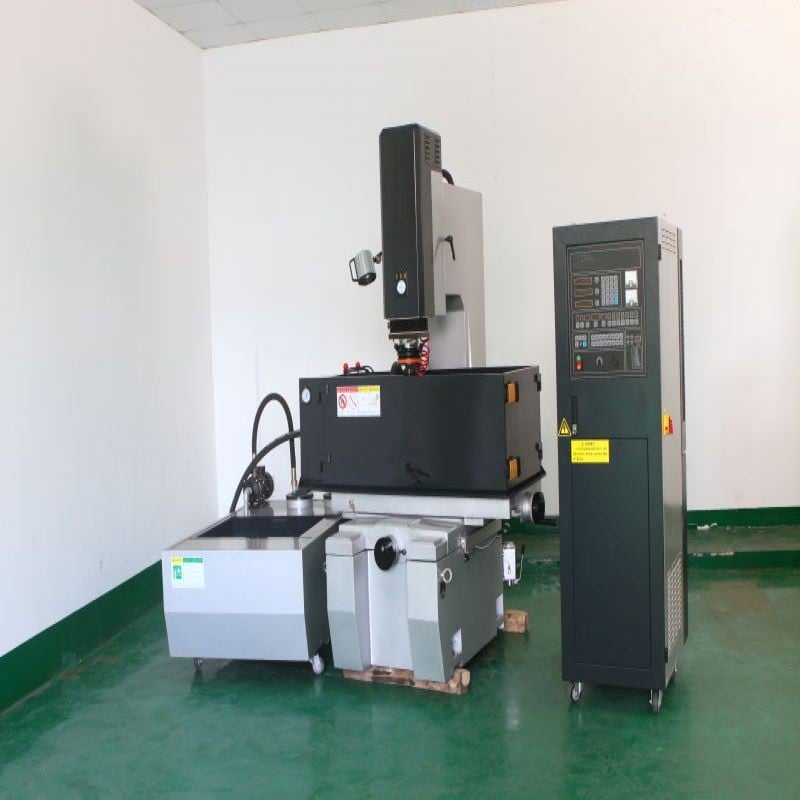
Manufacturers use electric discharge machining for selected features in suitable electrically conductive workpieces, including tooling cavities, through-cut profiles and drilled holes. The process family, material condition, geometry and inspection requirements determine whether EDM is appropriate. The applications below describe process-selection considerations, not a guarantee that every EDM machine can make every listed feature or meet an industry's qualification requirements.
EDM uses electrical discharges across a controlled gap between an electrode and a suitable workpiece. A dielectric supports the discharge process and debris removal; the fluid arrangement depends on the machine and operation. Wire EDM, sinker EDM and EDM drilling address different feature types. Surface finish, dimensions and access limits must be evaluated for the actual configuration rather than inferred from the general EDM principle.
Primary Industrial Applications of Electric Discharge Machining
Tool and Die Manufacturing Operations
Tool and die work can use sinker EDM for suitable cavities and wire EDM for accessible through-cut profiles, punches and inserts. Check the electrode or wire path, discharge gap, corner radii, flushing access and workholding against the drawing. Low mechanical cutting force does not eliminate clamping effects, stored stress, thermal surface changes or all risk of distortion.
EDM can be considered for selected features after heat treatment, including details in hardened tooling. Plan allowances, datums and inspection for the complete route; post-hardening machining does not guarantee dimensional stability or eliminate grinding and polishing. Cooling features, texture and parting-line details each require a suitable access path and validated process.
Aerospace Component Manufacturing
EDM drilling is used for suitable cooling holes in conductive high-temperature components, with hole geometry and machine configuration selected for the drawing. An angled hole and a curved internal passage are different requirements: do not infer arbitrary three-dimensional channel capability from a straight drilling electrode or a multi-axis label. Surface integrity, electrode wear, hole quality and the applicable customer qualification remain acceptance questions.
For a proposed aerospace feature, identify the exact alloy and condition, accessible machining path, fixturing and inspection method. Electrode wear and wire consumption remain relevant, and machining a material does not demonstrate that a part meets aerospace requirements. Document the customer's applicable dimensional, surface-integrity and traceability requirements before committing to the process.
Medical Device and Surgical Instrument Production
For surgical-instrument tooling or conductive device components, EDM may be a candidate where the required feature suits the process. Low cutting force does not establish a stress-free, damage-free, medically acceptable or finished surface. Any final component must be assessed against its drawing and the customer's material, cleaning, finishing and qualification requirements; this article does not establish HarsMarg medical-device production capability.
Do not infer implant longevity, bone integration, clinical performance or patient-specific approval from EDM machinability. Discuss an exact proposed feature and its manufacturing and inspection route with the responsible customer team. Porous surfaces, coatings and final device acceptance require their own specified processes and evidence rather than a generic EDM claim.
Specialized Manufacturing Applications
Electronics and Semiconductor Industry Uses
In electronics tooling, electric discharge machining can be considered for suitable conductive mold inserts, lead-frame tooling and fixture components. Check feature size, corner radius, electrode preparation, material condition and inspection access against the specific drawing. This tooling role is different from directly drilling every material in a finished circuit board.
Do not treat conventional EDM as a general microvia-drilling method for multilayer printed circuit boards. Ordinary PCB constructions include insulating dielectric layers as well as conductive copper; a copper layer does not make the entire drilling path suitable for conventional EDM. Distinguish laser or mechanical PCB drilling from EDM of separate conductive tooling and fixtures, and validate any specialized board-processing proposal independently.
Automotive Manufacturing and Racing Applications
EDM may be evaluated for suitable automotive tooling or conductive component features, including holes where the specified process supports them. For a fuel-system component, verify diameter, position, taper, entry and exit quality, surface integrity and inspection using the actual material and configuration. Successful drilling alone does not establish spray performance, emissions compliance or high-volume yield.
Gear-related tooling, forming dies and fixtures can include features for which EDM is worth evaluating. Compare the complete route with the available alternatives using the same drawing and acceptance criteria. Do not promise lower cost, preserved structural integrity or arbitrary cooling passages merely because a component is used in a transmission or racing application.
Energy Sector and Power Generation Equipment
For turbine or other power-generation parts, first distinguish through-cut profiles, drilled holes, cavities and inaccessible internal passages. These are not interchangeable EDM capabilities. Because EDM is thermal, preservation of all original metallurgical properties cannot be assumed; the proposed sequence and any post-processing must meet the customer's surface-integrity and dimensional requirements.
Potential features in energy equipment must be assessed individually for material, access, electrode preparation, workholding and inspection. A general ability to machine conductive alloys is not proof of suitability for a safety-critical valve, pressure component, downhole tool or nuclear part. Any such proposal requires the customer's applicable qualification and documented acceptance route.
Technical Capabilities and Material Applications
Machining Hardened and Exotic Materials
EDM does not depend on a mechanically loaded cutting edge, which can make it useful for suitable hardened materials. Hardness is not the only selection factor: conductivity, grade, heat treatment, thermal properties, geometry and discharge conditions still matter. Machining after hardening may avoid a later hardening step for the finished feature, but it does not eliminate distortion or surface-integrity checks.
For carbide, PCD, ceramics and composite grades, confirm the conductive constituents and continuous electrical path before considering conventional EDM. Ordinary insulating ceramics are not routine conventional-EDM workpieces. Use grade-specific process evidence and a suitable trial rather than assuming material-independent removal, predictable wear or freedom from thermal effects.
Precision Micromachining and Miniature Features
Micro-EDM and small-hole EDM capabilities depend on specialized hardware, electrodes, material, depth and inspection methods. Do not present a few-micrometre hole as a general machine capability without an identified setup and validated result. Check diameter, depth, taper, entry and exit condition, electrode wear and surface integrity for the particular requirement.
For miniature parts, evaluate the smallest feature against wire or electrode dimensions, discharge gap, handling, workholding and available metrology. Wire EDM requires a suitable through-cut path or starting access, while sinker EDM requires electrode and flushing access. Low mechanical cutting force does not by itself prevent deflection, damage or thermal alteration of a delicate feature.
Complex Geometry and Internal Feature Production
Sinker EDM uses a shaped electrode for suitable accessible cavities and related forms; wire EDM and drilling machines have different access requirements. The finished geometry is affected by discharge gap, electrode wear, motion, flushing and compensation. Finite corner radii, access and electrode removal still require review rather than a promise of unrestricted three-dimensional geometry.
Splines, slots and non-circular holes should be assessed against the exact process and electrode path. Broken-tool removal is also a separate operation requiring access and control of the erosion zone. Do not guarantee that surrounding threads or precision surfaces will remain undamaged; define the inspection and acceptance criteria before attempting recovery.
Strategic Manufacturing Advantages
Mechanical Cutting Forces and Electrode Wear
EDM avoids the conventional cutting-edge load, which can benefit suitable thin or delicate features. It does not eliminate every load or movement: workholding, flushing, temperature and released internal stress can still affect the part. Verify stability and dimensions on the intended setup rather than describing the process as stress-free or distortion-free.
Electrode wear and wire use remain process-planning items. Wear compensation and related control functions depend on the supplied controller, options and operating method; they do not automatically guarantee dimensional consistency. Document the electrode or wire specification, approved conditions and inspection plan for the actual part.
Surface Finish and Detail Reproduction
Surface finish depends on the material, electrode or wire, discharge settings, flushing and machining sequence. A finishing mode does not guarantee a mirror surface or eliminate hand polishing. State the required roughness measure and surface-integrity criteria, then verify whether the proposed route needs further finishing or removal of thermally altered material.
Texture, engraving and other surface details must be reviewed against electrode preparation, discharge gap, access and inspection. Reproducing a designed feature is not an exact, condition-independent transfer of the electrode surface. Confirm the required geometry and finish rather than promising the automatic elimination of a secondary operation.
Supporting Advanced Manufacturing and Industry Transformation
CNC, CAD/CAM, electrode changing, adaptive control and automated handling are configuration-dependent capabilities. Confirm the installed functions, interfaces, programming workflow and recovery behavior rather than treating them as universal EDM features. A digital model alone does not establish a safe, efficient or inspection-ready machining program.
EDM can be evaluated for accessible finishing features or support separation on suitable conductive additively manufactured parts. The build material, electrical path, internal stress, fixturing, support geometry and electrode or wire access still constrain the operation. Assess the full route and inspect the result; additive manufacturing does not remove EDM's access or surface-integrity limits.
FAQ
What materials can be processed using electric discharge machining?
Conventional EDM requires a suitable electrically conductive workpiece, but conductivity alone is not a performance guarantee. Confirm grade, heat treatment, composite structure, geometry and the required surface condition. Plastics, glass and ordinary insulating ceramics are not routine conventional-EDM materials; specialized research methods or coatings must not be presented as standard supplied-machine capability.
How does electric discharge machining compare to conventional machining in terms of production speed?
Compare speed using the complete route for the same drawing: preparation, programming, workholding, machining, consumables, finishing and inspection. EDM may be useful where a particular feature is difficult for another process, but there is no universal time or cost advantage. Use representative machining records rather than assuming secondary operations will disappear.
What determines the surface finish quality in electric discharge machining operations?
Roughness is influenced by discharge energy and timing, electrode or wire, material, dielectric, flushing and the selected sequence. Lower-energy finishing can change the surface, but the result must be measured with the agreed method. Roughness alone does not establish the absence of recast material, microcracks or residual-stress effects, and a competitor's finish number is not a HarsMarg specification.
Can electric discharge machining be used for high-volume production manufacturing?
Distinguish EDM used to make tooling for high-volume molding or stamping from direct high-volume EDM production of the component itself. Evaluate accepted output for the proposed setup, including preparation, electrode changes, downtime, finishing and inspection. Automatic handling and unattended operation require the appropriate configuration, operating instructions and validated recovery and safety provisions; they are not universal EDM functions.
Table of Contents
- Primary Industrial Applications of Electric Discharge Machining
- Specialized Manufacturing Applications
- Technical Capabilities and Material Applications
- Strategic Manufacturing Advantages
-
FAQ
- What materials can be processed using electric discharge machining?
- How does electric discharge machining compare to conventional machining in terms of production speed?
- What determines the surface finish quality in electric discharge machining operations?
- Can electric discharge machining be used for high-volume production manufacturing?