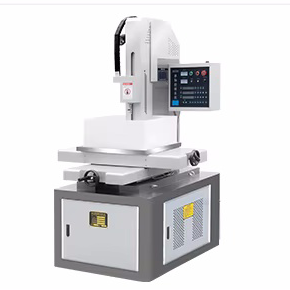
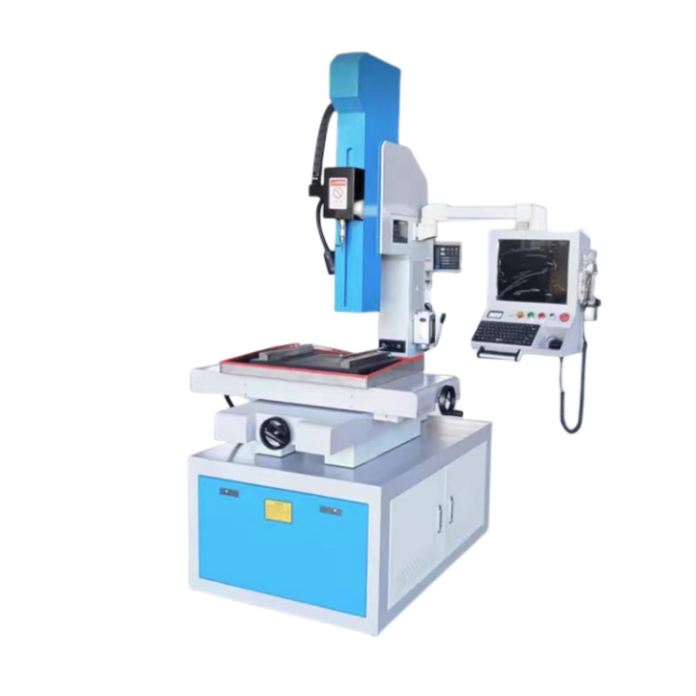
An EDM hole drilling machine creates holes in electrically conductive materials by controlled electrical discharge rather than conventional cutting force. A tubular electrode is commonly rotated while working fluid passes through the electrode to flush away eroded material and maintain the discharge gap.
Because the process depends on electrical discharge, the workpiece must be electrically conductive. EDM drilling can be considered for hardened materials, start holes for Wire EDM and other applications where conventional drilling may be difficult. Actual hole quality, machining time and electrode consumption depend on the material, hole diameter, depth, flushing conditions and selected electrical parameters.
HarsMarg currently lists the D703 in the single-axis CNC EDM drilling range and the DD703 in the three-axis CNC EDM drilling range. Choose by comparing usable table area, travel, electrode range, required drilling depth, workpiece loading, hole pattern and the level of programmed positioning needed. The controlled motions, electrode-servo arrangement and optional functions should be stated clearly in the final technical quotation.
The D703 is the option to review for a simpler drilling configuration. The DD703 should be reviewed when the project requires a broader CNC positioning configuration or repeated coordinate-based hole patterns. Final suitability must be checked against the actual drawing and workpiece.
View the D703, DD703, single-axis range or three-axis range.

 EN
EN