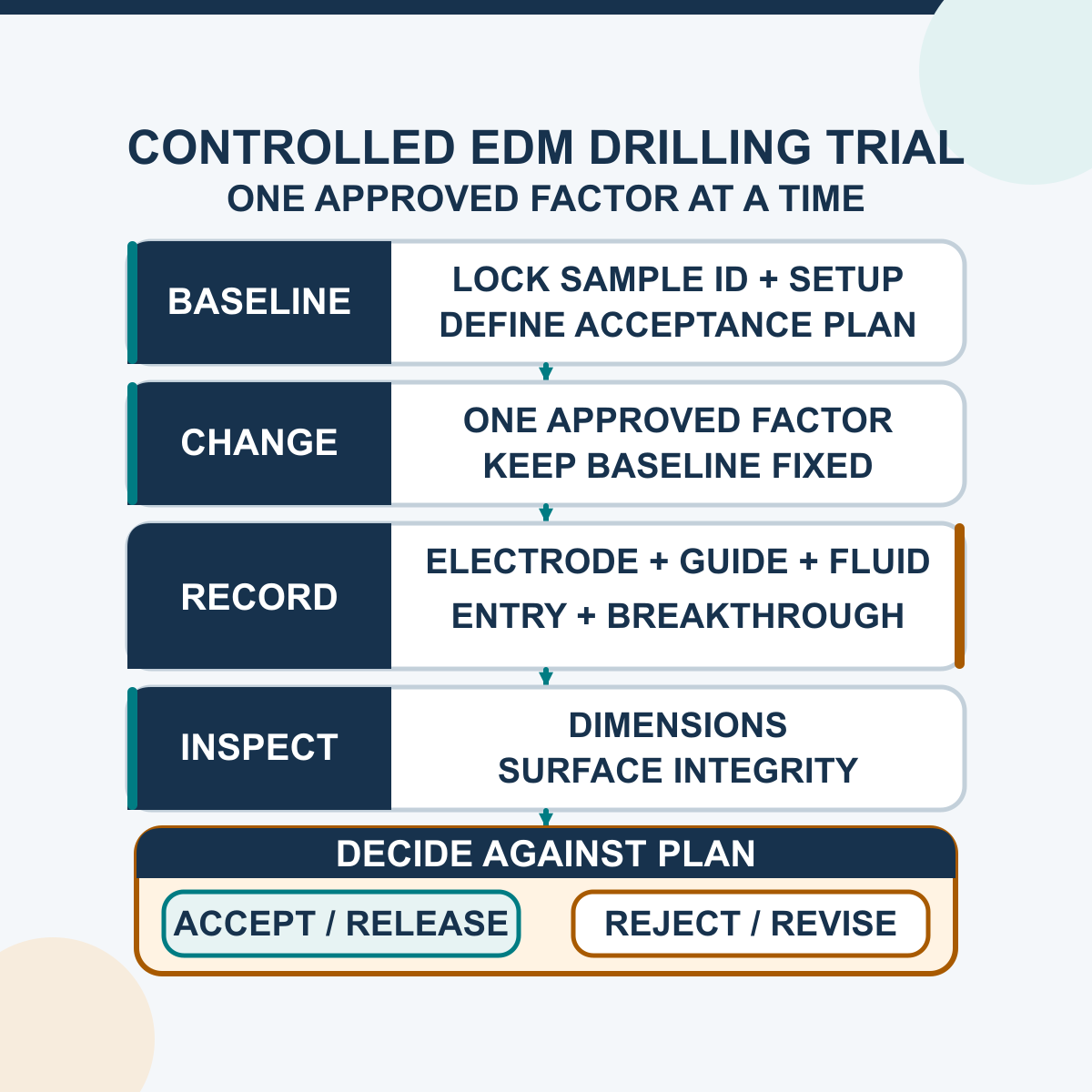
Optimizing EDM drilling means improving a defined result under controlled conditions—not applying one universal set of current, pulse, feed, rotation or flushing values. Start with a stable baseline, change one approved factor at a time, drill ...
VIEW MORE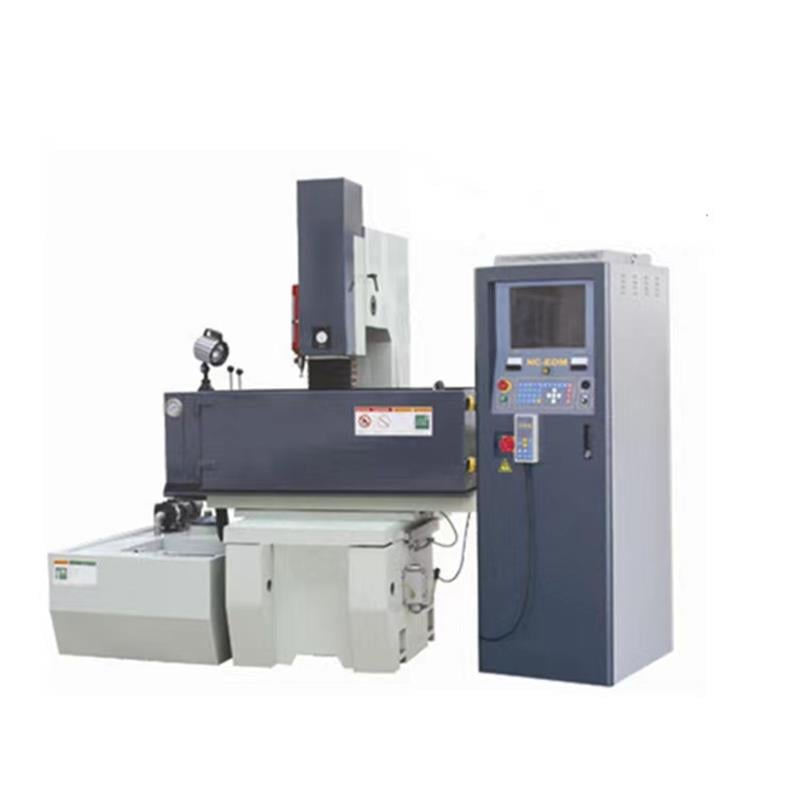
EDM drilling can help toolrooms make wire-EDM start holes and small passages in electrically conductive mold components, including hardened steel. Its suitability depends on the hole drawing, material, depth and required finish. It is not a substitut...
VIEW MORE
An EDM drilling machine can have controlled electrode feed without providing CNC positioning of a hole pattern. Automation can reduce repeated operator steps when the relevant functions are fitted and suitable for the job. Start by identifying the ta...
VIEW MORE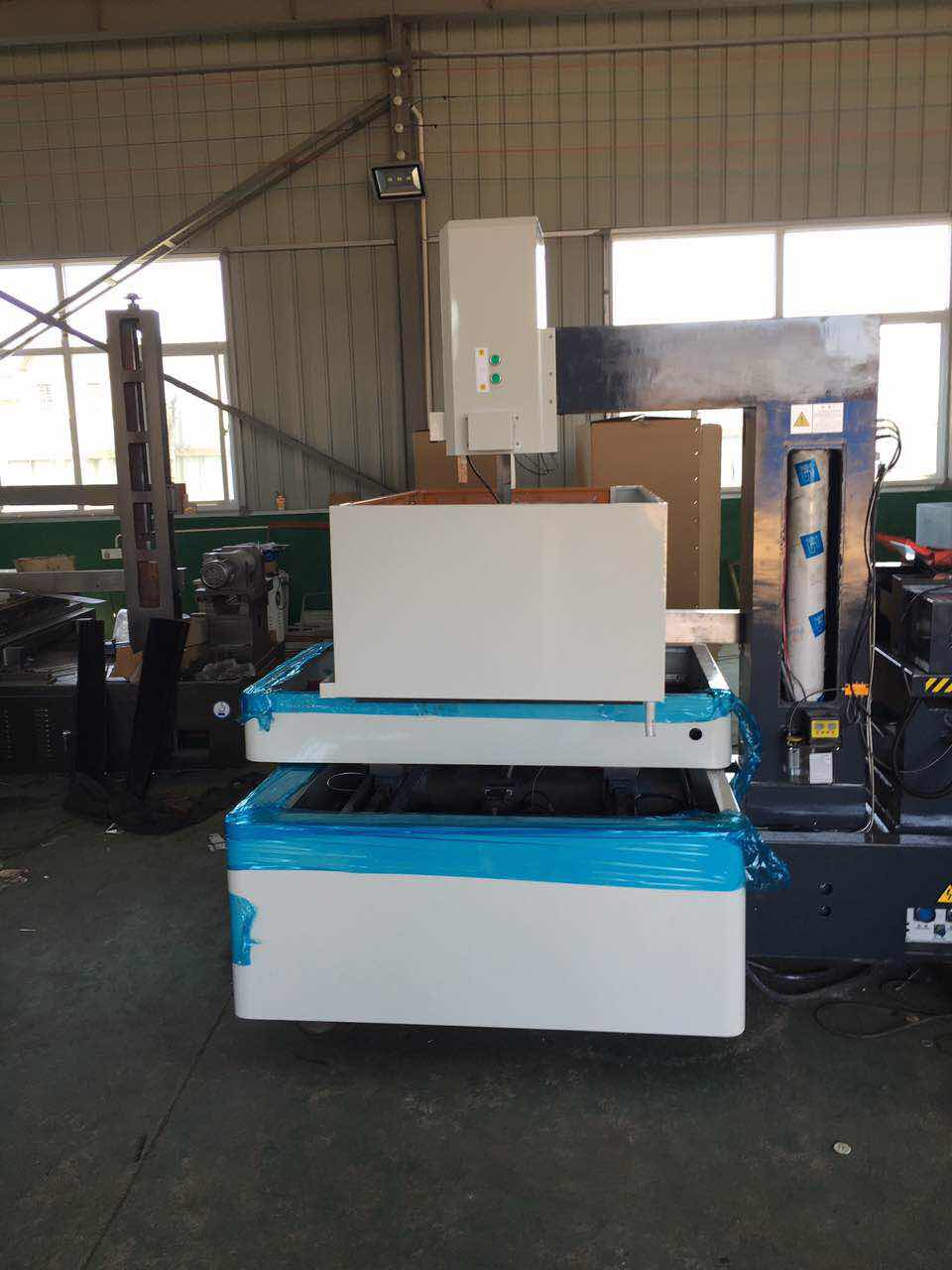
Selecting the right EDM drilling machine is one of the most consequential decisions a manufacturer or tooling engineer can make. The wrong choice leads to poor hole quality, slow cycle times, and elevated operating costs. The right EDM drilling machi...
VIEW MORE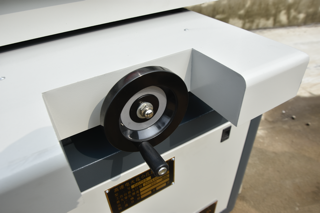
EDM machines may be worth evaluating when a conductive hardened workpiece is difficult to machine with a conventional cutting edge. The advantage is avoiding that cutting mechanism, not a universal promise of finer tolerance or lower cost. Select the...
VIEW MORE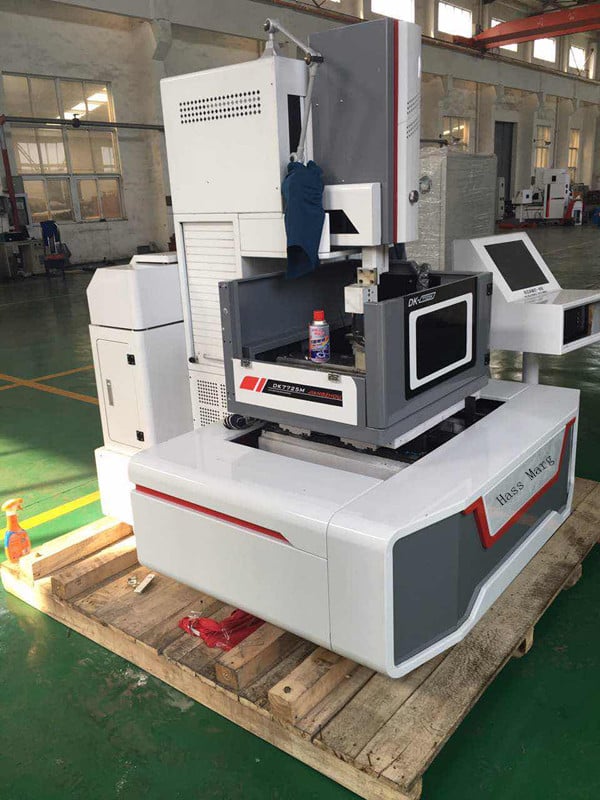
When engineers and procurement specialists begin exploring precision machining solutions, one of the first questions that comes up is how many types of EDM machines actually exist and what distinguishes them from one another. Electrical Discharge Mac...
VIEW MORE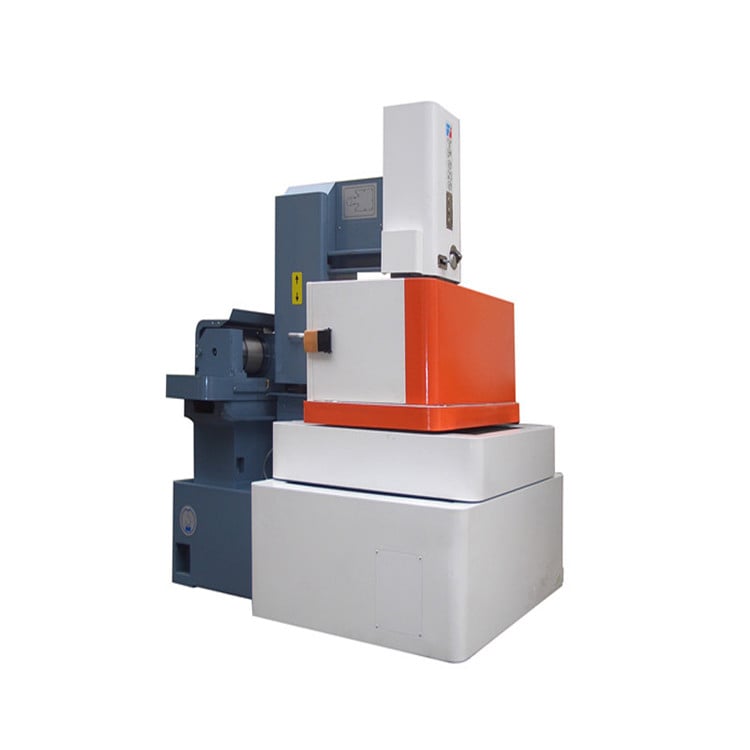
When manufacturers face the challenge of producing intricate geometries, tight tolerances, or hardened materials that resist conventional cutting tools, EDM machining consistently emerges as the preferred solution. Electrical Discharge Machining is a...
VIEW MORE
EDM can be useful for features that are difficult to produce by direct mechanical cutting, but quality must be demonstrated on the finished part. Assess dimensions, surface roughness and any specified surface-integrity requirements separately. A mach...
VIEW MORE
For repeat production of suitable conductive parts, wire EDM may be considered where the drawing requires complex profiles or machining after hardening. Its production value depends on the offered machine, workpiece, cutting route and acceptance requ...
VIEW MORE
In today's competitive industrial landscape, precision is not a luxury — it is a baseline requirement. EDM machines, or Electrical Discharge Machining systems, have become a cornerstone technology for manufacturers who need to cut, shape, and f...
VIEW MORE
Manufacturers use electric discharge machining for selected features in suitable electrically conductive workpieces, including tooling cavities, through-cut profiles and drilled holes. The process family, material condition, geometry and inspection r...
VIEW MORE
Manufacturing precision and surface quality remain critical factors in modern industrial production, particularly when working with hardened metals, intricate geometries, and tight tolerance requirements. When engineers and production managers seek m...
VIEW MORE
 EN