EN




How Wire EDM Controls Can Support Operator Efficiency
Wire EDM machine controls can support operator efficiency by making program review, setup, cutting-condition selection and interruption recovery easier to manage. The useful functions depend on the installed controller, generator, wire system and software options. A clear display or an automation feature does not by itself establish finished-part accuracy or a shorter production cycle.
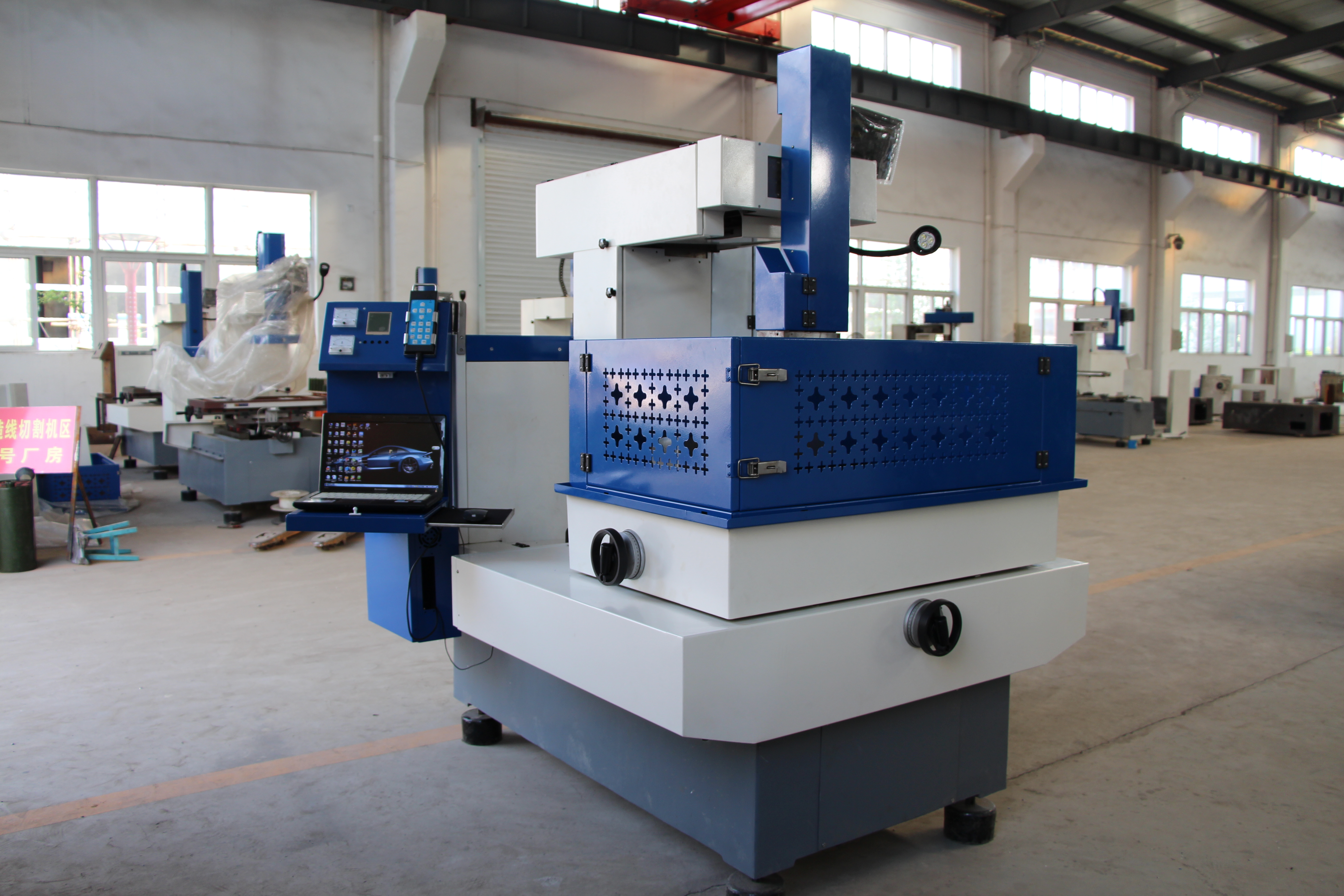
This article explains control functions to evaluate, not a standard feature list for every HarsMarg machine. Touch-screen operation, automatic threading, adaptive functions and network connections must be checked against the selected model and quotation. The equipment photograph is not evidence that the pictured machine includes all the functions discussed below.
Core Control Systems in Modern Wire EDM Operations
Advanced Touch-Screen Interfaces
Where fitted, a touch-screen interface can bring program, setup, alarm and machining-status information together. For an operator, the practical questions are whether settings are clearly labelled, the active program and coordinates are visible, and help or recovery instructions are available. Interface layout, language support and accessible functions vary with the control and software version.
Some controls provide graphical program views or support touch gestures; direct CAD import and three-dimensional viewing are separate capabilities that need confirmation. A screen image can help review a path, but it does not verify the fixture, work offset, wire alignment or available clearance. Those checks remain part of the actual machine setup.
Intelligent Automatic Threading Systems
Automatic wire threading is available on particular Wire EDM configurations; it is not implied by CNC control or by the term Wire EDM. Ask whether the quoted system can thread or rethread the specified wire through the proposed start hole and workpiece thickness. Submerged threading and recovery after a wire break also require configuration-specific confirmation.
Do not assume a universal threading success rate. Evaluate a supported threading system using the intended wire, start-hole condition, workpiece height, water or flushing arrangement and recovery sequence. Successful threading alone does not make a job suitable for unattended running: workholding, core handling, alarms, consumables and the manufacturer's operating and safety instructions still have to be addressed.
Automated Process Optimization Features
Real-Time Adaptive Control Systems
Discharge-gap control and additional adaptive machining functions should be distinguished. A specific control may respond to discharge conditions by changing feed or other supported settings, while wire-tension feedback or special corner strategies may require different hardware and software. Ask which signals the proposed system actually monitors and which adjustments it can make.
Supported feedback functions can help an operator respond to changing cutting conditions, but they do not prevent every wire break or guarantee the same finish on different jobs. Wire condition, flushing access, workpiece geometry, process settings and setup still matter. Assess recovery behaviour and the measured part result rather than treating an adaptive-control label as a performance guarantee.
Intelligent Power Supply Management
Where a generator includes a cutting-condition library, the operator may be able to select a documented starting condition for the wire, material, thickness and cutting stage. A stored recipe is not the same as automatic material identification. Use the selected machine's instructions and establish whether its settings are suitable for the actual workpiece.
Anti-electrolysis circuits and specialised finishing functions are generator-specific features, not assumptions to make about every Wire EDM machine. Check their availability, supported materials and operating limits in the technical configuration. Do not promise a universal finish, corrosion resistance, energy saving or removal of the need for process adjustment from a power-supply feature name.
Enhanced Programming Capabilities
Advanced CAM Integration
CAD/CAM software and a machine control must exchange compatible geometry or NC programs. Direct CAD import, on-control programming and an external CAM workflow are different arrangements. Verify the accepted file formats, available software licences, postprocessor and controller compatibility instead of assuming every model can import and machine a three-dimensional model directly.
A graphical preview or supported simulation can assist program review, but its coverage depends on the software and the modelled information. It may not represent the actual fixture, wire path, offsets or loose core. Check the program and setup using the machine's prescribed verification procedure before cutting; a successful screen simulation is not proof of a collision-free or conforming part.
Custom Macro Programming
If the controller supports macros, subprograms or saved routines, these can reduce repeated data entry for suitable recurring operations. The supported commands, variables and calling methods are control-specific. A routine written for another controller should not be assumed compatible, and automated repetition does not validate the original program or setup.
A useful routine library identifies the program revision, intended job, work offset, process conditions and operator checks. Reuse requires review when the drawing, material, fixture, wire or control software changes. This can make preparation more organised, but consistent finished-part quality still requires an appropriate process and inspection rather than a saved macro alone.
Remote Monitoring and Industry 4.0 Integration
Connected Manufacturing Solutions
Remote monitoring, where supported, can show selected machine states or alarms to an authorised workstation or service. A network port alone does not establish mobile access, remote control or live production reporting. Confirm the available data, update method, access controls and any required software or service before planning a connected workflow.
Connection to a manufacturing execution system (MES) or enterprise resource planning (ERP) system requires a compatible interface and an agreed data workflow. Automatic scheduling is not a necessary consequence of connecting a machine to a network. Define the required states, job identifiers and operator actions, and distinguish read-only monitoring from any authority to command the machine.
Predictive Maintenance Systems
Maintenance timers, consumable counters and alarm histories can help organise service, but they are not automatically predictive maintenance. Prediction requires suitable condition data and a demonstrated method of interpreting it. First establish what the installed controller records and which maintenance actions are required by the equipment manual.
Do not infer machine-learning diagnosis or a forecast of component life from a maintenance screen. If predictive functions are offered, ask for their documented inputs, limitations and response procedure. Without that evidence, describe only the available records or reminders; do not claim guaranteed downtime reduction, failure prevention or longer machine life.
Frequently Asked Questions
How do advanced controls improve cutting accuracy in wire EDM machines?
A supported control can help manage programmed motion, discharge conditions and operator setup tasks, but it does not establish a finished-part tolerance by itself. Verify the actual control functions and assess the result with the specified material, geometry, wire, cutting conditions, setup and inspection method. Positioning specifications, surface roughness and measured part dimensions describe different aspects of performance.
What are the benefits of automated threading systems in wire EDM machines?
Where fitted and suitable for the job, automatic threading can reduce manual threading steps and assist recovery between operations or after a wire break. Its usefulness depends on the wire, start hole, workpiece height and supported threading conditions. No universal success percentage or unattended-production capability follows from the feature alone.
How do Industry 4.0 features enhance wire EDM machine operation?
Supported connections can help a workshop collect status information and organise its response to alarms or maintenance needs. The benefit depends on the installed interface, usable data and the workshop's workflow. Remote monitoring, MES or ERP integration and predictive maintenance are distinct capabilities; each needs evidence rather than being assumed from an Industry 4.0 label.